After the storm

To the casual visitor, New Orleans oozes a sultry, sassy attitude from every wrought iron balcony and open-shuttered jazz club. Revellers with Hurricane cocktails in plastic cups dodge falling beads and hustlers for girlie bars. Everything is good natured, as befits a city with a name like the Big Easy. Since Hurricane Katrina, however, the city has been like a comedian, its jovial persona a public facade only. Underneath, New Orleans' private face cannot disguise the tragedy that has had to be endured.
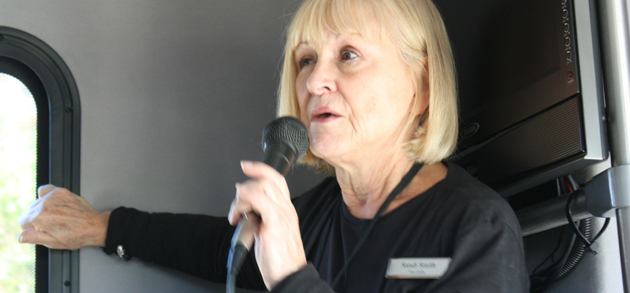
Sandi Smith, working for Gray Line as a tour guide, summed it up perfectly. "We were ostriches. We thought that we would be safe, have a party and ride out the storm. We were wrong. I watched my friends go crazy afterwards, getting angry, saying crazy things. I thought I was doing alright, but they said I was crazy too."
At 64, she said that opting to stay in the city was one of the decisions she most regretted in her life. Her rheumy eyes were distant. Sandi had been evacuated to the Convention Centre, a huge structure with large glass windows right by the river, where she waited for four days for supplies to come. The MREs (meals ready to eat) were not quite what she had in mind. She chuckled as she reminisced. “I was on a high protein diet at the time," she mused, "but when those packs of food came they were full of carbs. 4000 calories in one meal! I went into carb shock right there and then!”
Katrina struck on August 29th, 2005. In the news at the time, news crews reported bland facts about the number of dead, broadcasting cliched pictures of devastated houses and poignant rescues. As the days passed, around the world the shocking truth emerged about how the evacuees in the Superdome struggled as temperatures soared and the humidity became unbearable. Gangs roamed the Superdome as well as the streets; police officers that should have offered protection had, in many cases, saved themselves instead and fled their posts.
Sandi had thought long and hard about whether to put together a tour of the areas affected by Katrina, she said, but had eventually been persuaded to do so as a way of showing outsiders what her beloved city was going through. It was November 2012 when I took her Katrina tour, fully expecting to see neighbourhoods repaired and now mere markers on a map of past tragedy.
I was wrong. It is hard to process how, after so long has passed and in a place as wealthy as the United States, damage is still clearly visible and lives are adversely affected by the tragedy on a day-to-day basis. New Orleans still bears horrific scars like a war veteran. Some of them are physical. We drove down "Chop-out Street", so nicknamed because its desperate residents had no alternative as the floodwaters surged in but to hack their way out of their attics with an axe. Sandi pointed out a house, abandoned, overtaken by weeds and snakes and stinking mould. Its owners fled the city and never returned. Next-door, powerless to do anything, their neighbours couldn't sell up even if they wanted to. New Orleans' population is a little over half what it was before, proof that this story isn't unique. The city's easterly districts, including the Lower Ninth Ward and Lakeview, are full of empty lots and derelict properties. Some have been able to afford to repair, to raise their wooden bungalows onto new foundations. Others, let down by insurance companies that refused to pay out, still have blue tarpaulin patches on the roof and boarded up windows seven years on.
The insurance companies argue that the hurricane’s damage in swamping homes with the flood surge was down to the fact that the city authorities didn’t act appropriately. They didn’t maintain effective levees; they didn’t act decisively once storm hit and order a mandatory evacuation. Amazingly, the year after, Mayor Ray Nagin managed to get re-elected to office and served another four years; there were issues with absentee voters as many of the population were stranded in Houston and such places, but even so, it is hard to comprehend how an electorate could support a man whose indecision and incompetence led to hundreds of deaths. Officially, therefore, as the claims stemmed not from the hurricane but from human error, people weren't covered and many lost everything. Compounding the problem was the issue of the specific type of insurance purchased; many residents, living below sea level due to centuries of subsidence, had been unable to gain insurance for anything flood-related, so the wind damage was covered but anything done by the storm surge wasn’t. It was quite easy for insurance companies to reject a claim by stating that the damage was done by the surge. Ironically, if residents had done as they were eventually told and evacuated, they couldn’t have been present to witness events and prove the insurance company wrong.
Sandi pointed to homes with the tell-tale crosses from emergency search and rescue teams still visible on walls. Many crosses are at first floor level. That was the level of the water; the ground floor was totally swamped. Some have been left as a memorial, others remain because the owners never came back. Rescue crews in boats marked the part of the house that remained visible. The number at the bottom of the cross identified the number of dead found at the property. At the Louisiana State Museum one, on a garage door, had been recovered and put on display. The owner had scribbled, in red paint, that the garage contained their dead dog, with a plea not to remove it because they wanted to return to bury it. Sandi told me that she was lucky; she had got back to her cats in time. Almost half a million pets weren't so lucky.
In August 2012, on the seventh anniversary of the disaster, a ceremony was held for the three hundred or so bodies that remained unclaimed in the city's morgues and they were finally laid to rest. Part of New Orleans' charm is its transitory characters: the tarot card readers, the drifters, the musicians existing hand to mouth. But without family or close friends, there was no one to miss them and the law stated that they couldn't be disposed of until seven years had passed.
The city is still trying to move on, emotional baggage proving a heavy weight to shift. Demolition orders can finally be agreed, removing those snake-infested mouldy rotten dwellings and leaving empty lots. The Make It Right organisation, set up by Brad Pitt, offers new properties for people who can prove a previous ten year residency in areas such as the Lower Ninth Ward. It’s not without controversy, but it’s a start. Maybe there's hope for the Big Easy's soul after all.
